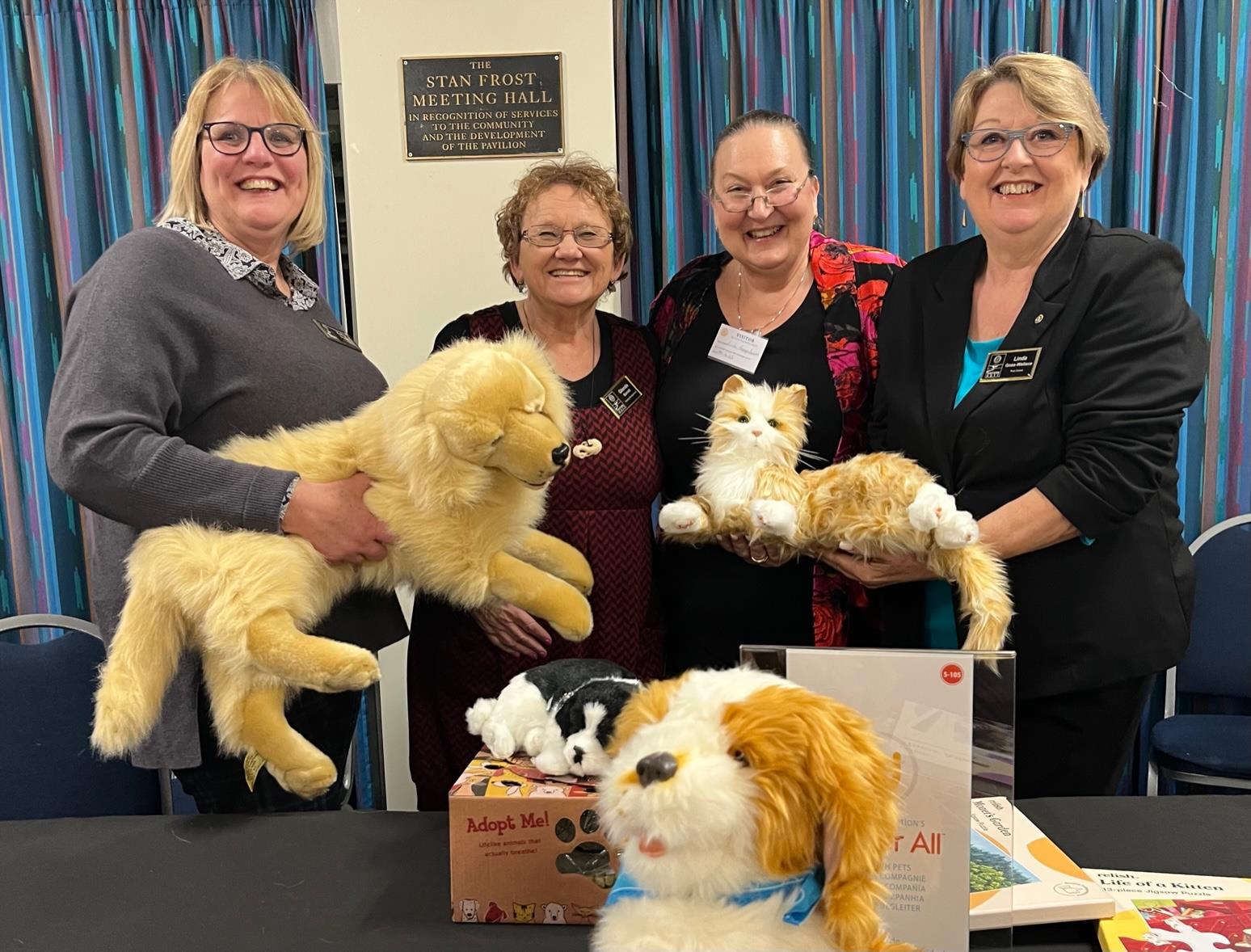
On Monday night we had an excellent presentation from Linda Hoogenboom, Managing Director of Quality Life. Linda is a Qualified Diversional Therapist who has been working in the Aged Care industry since 1995 as an Activities Professional. However, her interests are diverse and encompass Dementia, Disability and Mental Health and have recently seen Linda working with Early Onset Dementia. Basically, Linda is interested in anyone who has a special need. Passionate about using non-pharmacological therapy to improve the lives of those who require it, Linda firmly believes that Diversional Therapy is one such critical solution. But, having worked in the industry for so long she is also aware of the issues and constraints experienced in the role.
In 2013 Linda founded Quality Life with the aim of providing Quality Activity Resources to health professionals and families of clients to assist them in providing comfort, joy and meaning to those in their care. She has worked tirelessly to improve the profile of Diversional Therapy by attending Aged Care and Dementia conferences around New Zealand and profiling products available.
What is Diversional Therapy?
Diversional Therapy is a professional healthcare practice that facilitates purposeful, meaningful recreational opportunities for people needing support in life.
The aim is to enhance the overall physical, emotional, social, intellectual, cultural and spiritual needs of these people through person centered activities.
It can be used in aged care, IHC homes, other care facilities, and hospitals, using a holistic approach, working with individuals, within groups. Linda believes one of the best parts of this therapy is that it is a non-pharmacological intervention that improves well-being without drugs.
Dementia
Linda explained that Dementia is an umbrella term for many different types of diseases, all characterised by cognitive impairments, including Alzheimers, Lewy Body, Vascular, Frontotemporal and Parkinsons.
Linda noted that every 3 seconds someone in the world is getting Dementia. In Aotearoa New Zealand there are currently 70,000 with Dementia, predicted to increase to 170,000 by 2050. The fastest growing sector is Maori, Pasifika and Asian. Worldwide, the number is 55 million, growing to 139 million by 2050.
Quality Life
Quality Life has a mission statement of “enriching lives through meaningful activities”, using a Social Enterprise model.
Aged Care has traditionally used children’s toys, as they have been readily available. However, these are not safe or appropriate for Dementia patients. Consequently, Linda has imported from overseas a range of appropriate products – toys, games, puzzles - for different levels, ranging from ‘early’ to ‘late’ onset Dementia, including:
- Aqua Paints - re-usable, designed for adults
- Books
- Interactive Robotic Animals which can roll over, purr, lick, and have ‘beating hearts’
One robotic animal, named ‘Hug’ has a ‘beating heart’, plays favourite music, and most importantly, ‘gives love back’ by giving hugs.
One downside is that some of the imported products don’t include our cultural context. Linda’s goal is to design culturally appropriate products for different cultures. Already, there are ‘reminiscing cues’ resources available in Pasifika languages to increase patient engagement. She also has a goal of providing a range of support for ‘younger' onset patients.