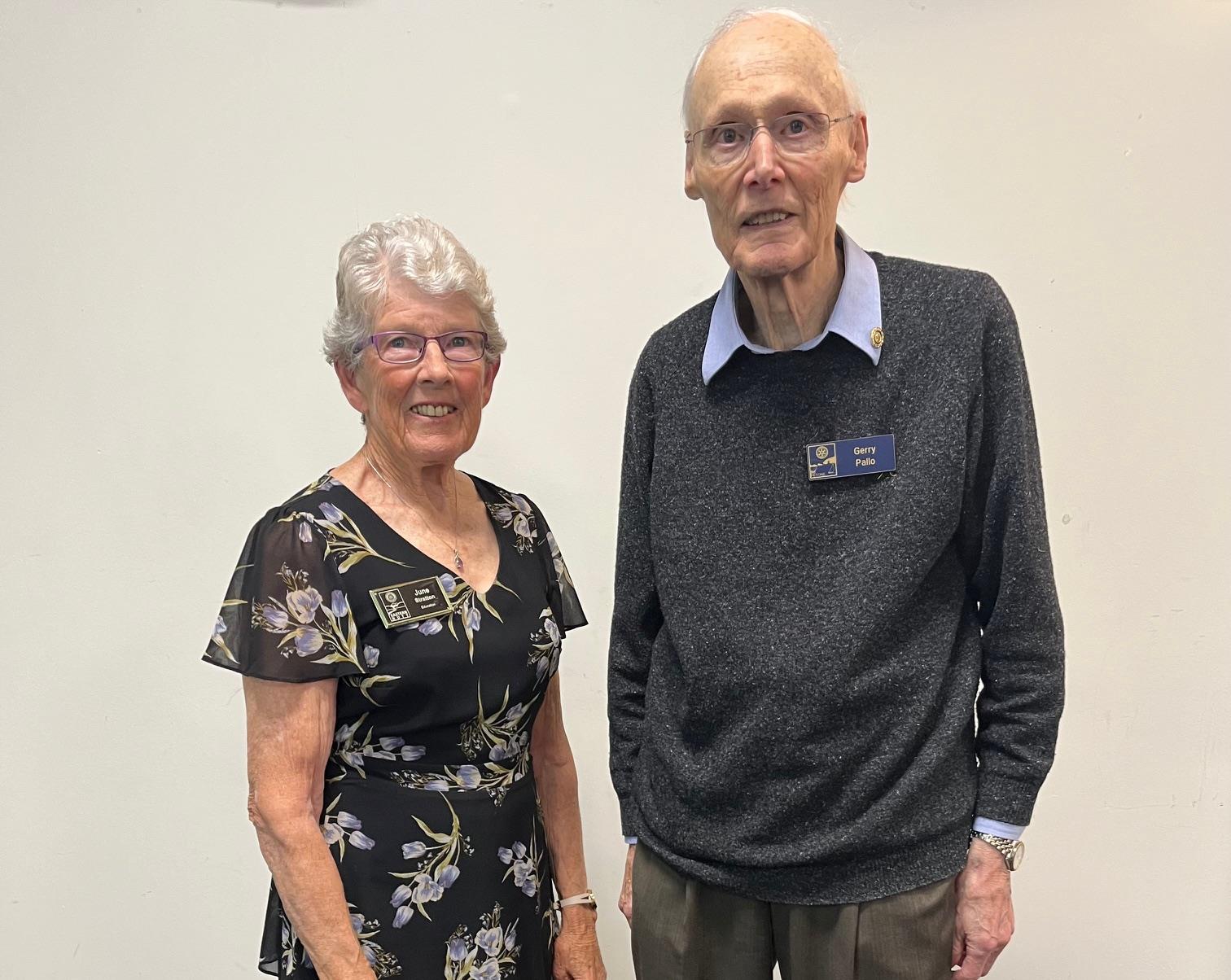
When you think of iconic New Zealand appliance brands, “Pallo” might not immediately spring to mind today - but for households between the 1920s and early 1960s, it was a trusted and familiar name. From sturdy green-and-yellow washing machines to reliable cake mixers, Pallo Engineering Limited played a quiet yet important role in everyday domestic life. And, as members discovered at Monday evening’s meeting, its story is as remarkable as the products it produced.
Guest speaker Gerry Pallo gave us a fascinating glimpse into the life and work of his father, Karl Pallo - the founder of Pallo Engineering. From humble beginnings, Karl built a business that grew rapidly to employ more than 100 people, navigating both the Great Depression and the challenges of World War II.
The story begins some 130 years ago in a small village near Tallinn, Estonia. With an engineer father, Karl was introduced early to the world of mechanics. His career would take him across Europe and as far as Sydney before he arrived in Wellington in 1929 to establish a branch of the French company SATAM, specialising in aviation refuelling pumps.
What followed was a testament to Karl’s determination, skill, and foresight. At a time when many businesses struggled, Pallo Engineering expanded - producing not only household appliances but also precision-engineered components used by other manufacturers. The company became known for its accuracy and reliability and notably employed many women in roles such as cog making, die casting, and assembly - progressive for its time. Karl also demonstrated a strong commitment to his workforce, providing social activities and sporting opportunities that fostered a sense of community within the company.
During World War II, the business pivoted to munitions production, contributing to the war effort and further strengthening its capabilities. In 1945, Karl established Die Castings Limited in Gracefield, marking another phase of growth. As global markets evolved in the 1950s, Pallo products were, for a time, produced alongside those of Sunbeam - an indication of the company’s reputation for quality.
In 1962, Karl sold the business to Sunbeam New Zealand and retired with his wife to Taupō, closing a significant chapter in New Zealand’s manufacturing history. Gerry’s presentation, enriched with personal recollections and photographs, brought this story vividly to life. It was a reminder of the ingenuity, resilience, and quiet innovation that helped shape our industrial heritage.
Our thanks to Gerry for sharing such a compelling piece of family and local history.