But what happens when they grow up?
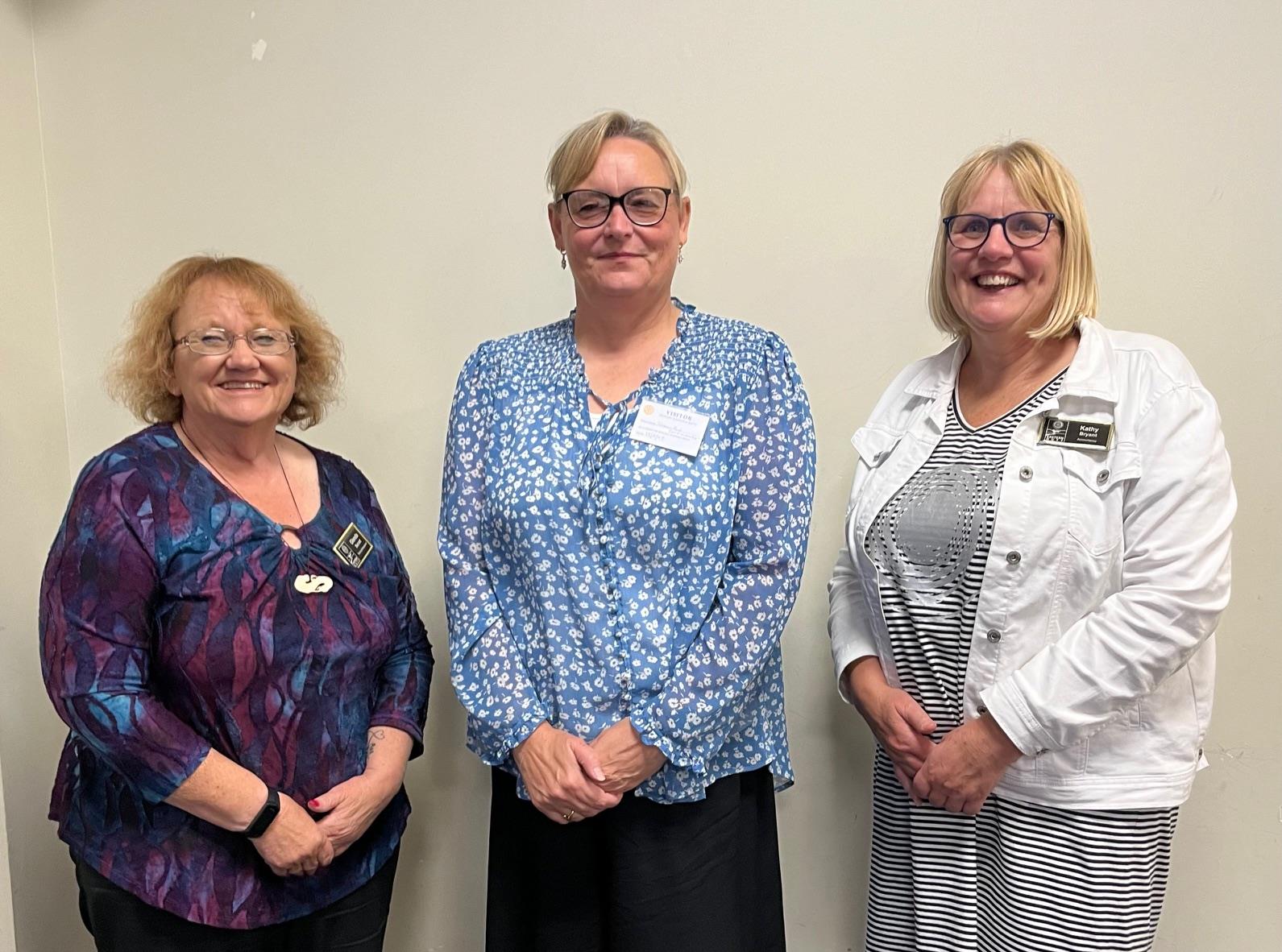
Children with physical or intellectual disabilities are reasonably well looked after by the state and we are well aware that Naenae College and Hutt Valley High School have excellent special needs units, but what happens when the young adults have to leave by the time they turn twenty one? Manager Samantha Coromandel gave us an outline of the work of the Thumbs Up Trust.
Samantha came to New Zealand as an import for North Harbour Basketball after she had played for England and had become a qualified sports coach. After working with North Harbour she became a manager in the Youth Service and then, two years ago joined the Thumbs Up Trust. This trust had been founded as "AfterCare" in 2009 in the Hutt Valley by parents of children with an intellectual disability. The parents were concerned about the lack of opportunities for their children and the difficulties most families had in catering for their needs. (Some of us remembered how the IHC had provided IHC workshops where people were employed in sheltered workshops like the one in Waddington Drive, but these had been unable to survive the challenges of the Employment Acts and minimum wage acts and Health and Safety legislation and no longer existed).
The Trust has the aim of providing a full and fulfilling life for every individual. It's vision is to provide opportunities for five hours five days a week, although not every person will be with them all that time. They aim to encourage a sense of autonomy, a feeling of participation and contribution and developing mutually respectful relationships. On enrolment every individual from age 21 up will be encouraged to develop a personal plan for the year. There are many activities including games, sailing, tramping, farm and cultural visits and visits to favourite cafes to join in. Some of the activities involve service, such as (supported) baking, working in a library or work placement. In all of these the participants will be fully supported by trained staff, sometimes two staff to a participant, sometimes one to one. Many of the staff are volunteers, some are parents, some are paid and some are specialist professionals such as speech and language therapists. Family engagement is very much encouraged as volunteers and board members. Numbers in the scheme were originally capped at 25 "full time equivalents" but including part timers the limit is now nearer fifty. Unfortunately to do this properly is not cheap. The government provides funding for some of "our men and women" on an individual basis for a limited number of hours but this is nowhere near enough. Samantha is continuously contacting charitable trusts and organising fundraising activities. The cost of providing this scheme is something like $50 - $60 an hour! Sometimes families can pay but very obviously there is more demand than this can meet. Samantha did not stress, in fact did not mention finances until I asked her afterwards, but very obviously this is an enormously worthwhile cause which fully deserves the community's support.