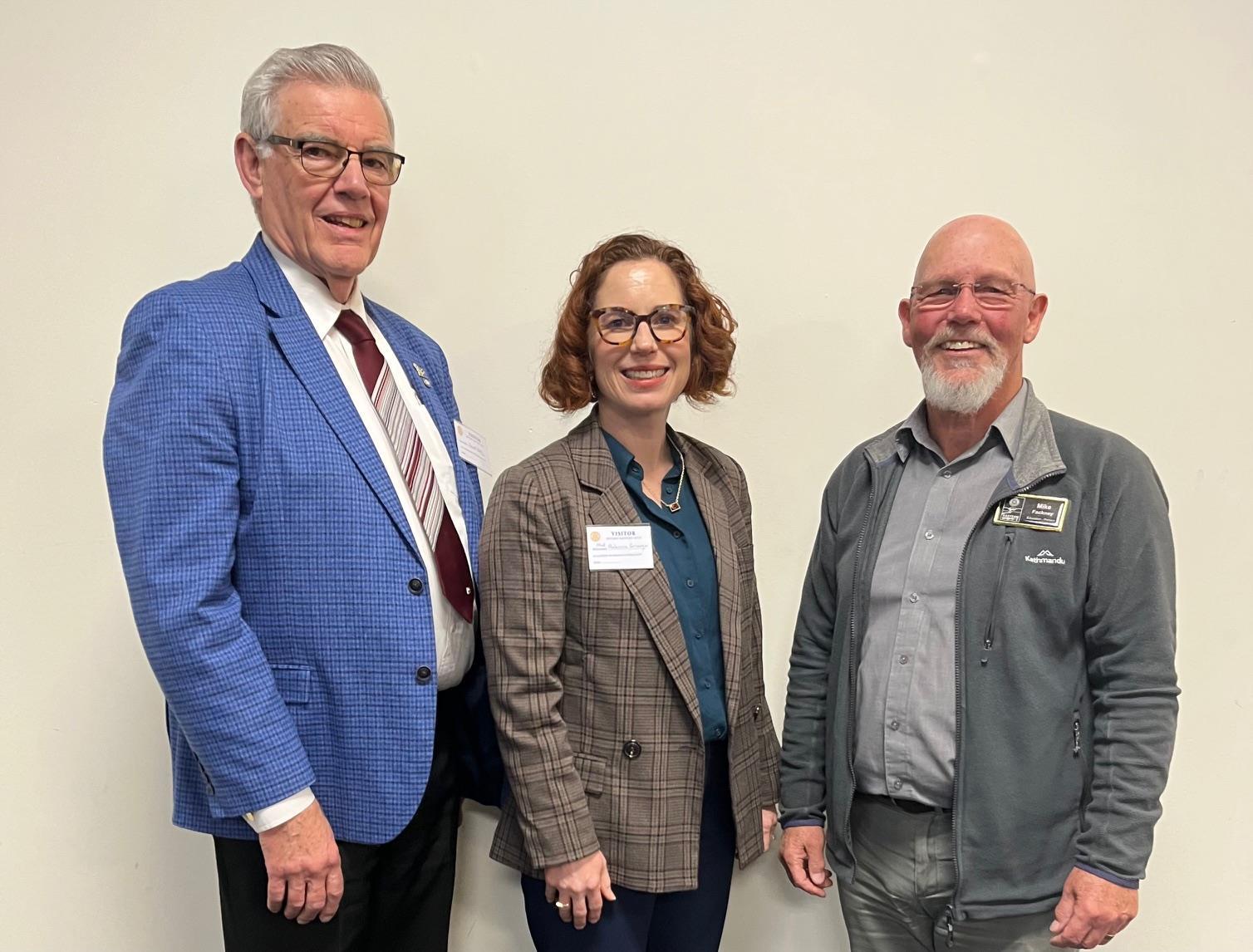
On Monday evening, we were privileged to hear a wonderful talk from Professor Rebecca Grainger, entitled “Digital Doctors and Dodgy Joints”. Rebecca is Professor of Medicine, Otago University Wellington, and a Consultant Rheumatologist at Hutt Hospital. She is passionate about patient-focus care and providing, with colleagues, collaborative care for those with arthritis.
Rebecca shared how she grew up in Plimmerton, and her journey to gain a PhD, and to become a rheumatologist.
She shared that there are over 100 arthritis conditions, with the most common being osteoarthritis (OA), rheumatoid arthritis (RA), and gout. Arthritis affects 1 in 6 New Zealanders, and is a leading cause of disability, especially with ageing.
She indicated that there was a shift in care, from just medications, to now including lifestyle, monitoring, self-management, and technology. This was possible with more targeted immune therapies for RA, new drugs for inflammation and co-morbidities, and earlier diagnosis with the use of imaging and biomarkers to detect disease before joint damage. Digital health apps exist and have some good features – exercise, sleep, arthritis tracking, and over time will increasingly alignment with best practice/evidence. One easy way to choose appropriate apps was to visit the Healthify website: www.healthify.nz/app-library
Rebecca spoke of the benefits of digital health wearables, such as Smartwatches and fitness trackers. They, not only measure activity levels, sleep, and heart rate, but also detect early signs of flares in RA or track stiffness in OA. These will increasingly help doctors personalise treatment and ensure patients stay engaged. The use of AI will increasingly aid in early diagnosis, interpret joint X-rays and MRIs to detect early signs of damage, predict outcomes, and tailor treatment.
She suggested that future direction needs to include:
- Digital twins – computer models of a patient’s joints to predict progression.
- Precision medicine – using data to tailor treatment to the individual.
- Equity challenges – need to ensure Māori, Pasifika, rural patients have access to these tools.
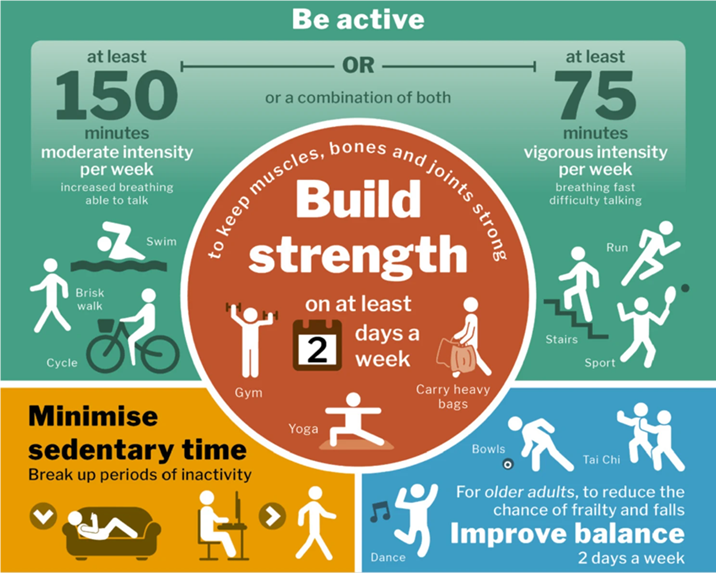
Her mantra was: “The best doctor gives the least medicine – and prescribes movement, meals, and meaning.” She emphasised the need for adults and older adults to increase their physical activity, and recommended the WHO physical activity guidelines, below.
We are grateful to Rebecca for providing a stimulating, and outstanding presentation, full of very interesting information and advice, and delivered in a dynamic, but easy to understand, manner.